


DRAM Price Fixing Lawsuit Survives: What It Means for RAM Prices
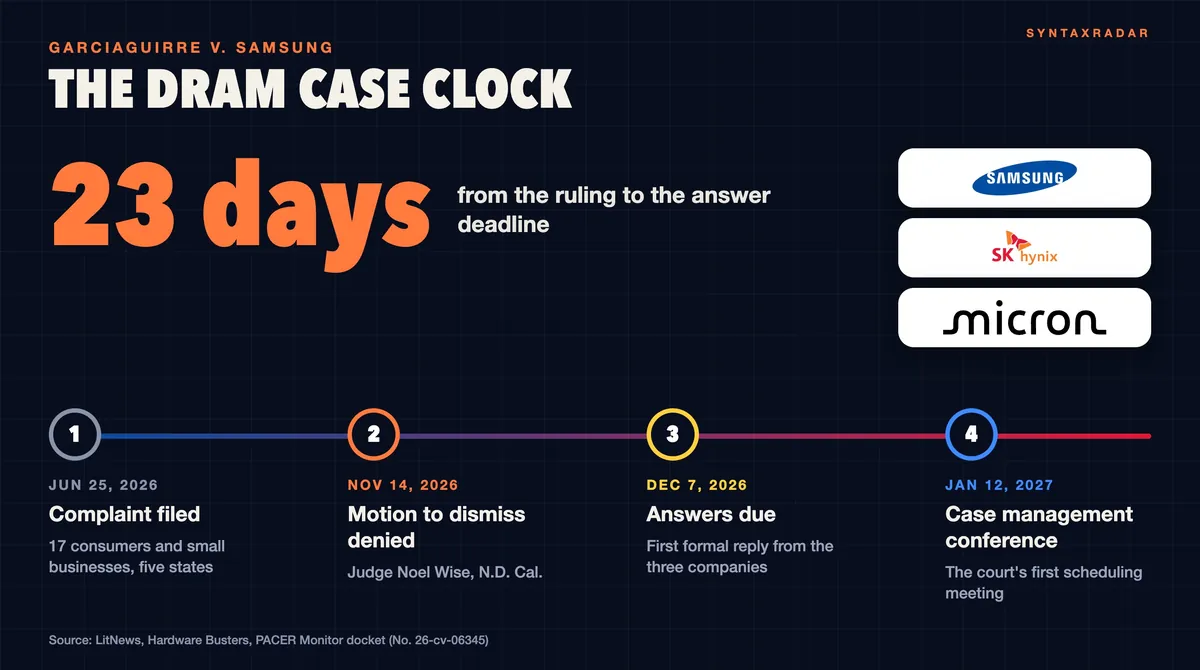
On November 14, 2026, Judge Noel Wise (N.D. Cal.) denied Samsung, SK Hynix and Micron's motion to dismiss a proposed class action alleging coordinated DRAM supply cuts, according to LitNews and Hardware Busters. Nothing is proven yet; answers are due December 7, 2026.

Abdul Rehman
Lead Systems Architect and Technical Director · · 8 min read

The short version
- 697% over 18 months
- Alleged conventional DRAM price rise (complaint)
- Over 91%
- Alleged combined DRAM revenue share, Q3 2025 (complaint)
- December 7, 2026
- Defendants' answers due
Why it matters: A judge let the DRAM antitrust case proceed on the strength of specific shared moves like near-identical customer-vetting questions, but nothing is proven and RAM buyers get no relief yet.
On this page
The DRAM price fixing lawsuit against Samsung, SK Hynix and Micron survived its first big test: on November 14, 2026, Judge Noel Wise of the federal court in the Northern District of California denied the three companies' joint motion to dismiss, according to LitNews and Hardware Busters. The federal antitrust case moves forward. Nothing has been proven. At this pleading stage, the court treats the plaintiffs' allegations as true and asks only whether they tell a plausible story.
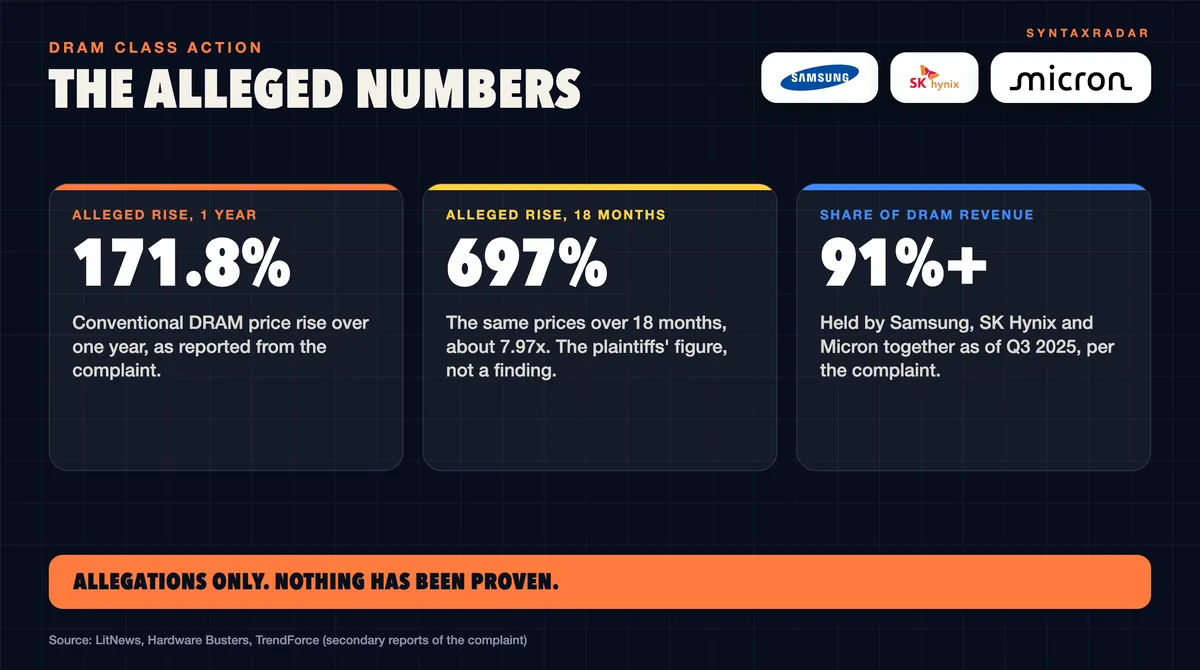
That matters to anyone who has watched RAM prices jump. The complaint, filed June 25, 2026 by 17 consumers and small businesses from five states, alleges that the three firms held over 91% of global DRAM revenue as of Q3 2025 and cut supply together. It claims conventional DRAM prices rose 697% over 18 months. Those are the plaintiffs' numbers, not findings by the court.
What we checked: we tried to read the order itself (ECF No. 68) and could not. CourtListener refused access, and the PACER Monitor docket we opened stops at October 12, 2026, before the ruling. Every detail of the ruling below therefore comes from LitNews and Hardware Busters, whose accounts agree with each other.
Did a judge dismiss the DRAM price fixing lawsuit?
No, a judge did not dismiss it. The case is Marc Garciaguirre, et al. v. Samsung Electronics Co., Ltd., et al., No. 26-cv-06345. The docket shows the hearing on the motion was moved from October 21 to November 13, 2026, at 9:00 a.m. in San Jose Courtroom 3 (docket entry 64). The ruling is dated November 14, 2026.
According to LitNews, the court held that the complaint plausibly alleges an agreement that violates Section 1 of the Sherman Act (the core US antitrust rule against competitors agreeing to restrain trade). The court also found the case is not a rerun of an earlier DRAM suit, known as DRAM II, whose dismissal the Ninth Circuit Court of Appeals affirmed in 2022.
The companies had pressed that point. Their September 3, 2026 motion argued the claims recycle earlier price-fixing claims that were already thrown out, and that the state-law claims fall with the federal ones, according to a summary of MLex's report (we could not open the full article).
Here is what the ruling does not do. It does not find that anyone fixed prices, it awards no money, and it does not certify a class. The defendants have not yet filed their answers to the complaint, which are due December 7, 2026, so nothing in this ruling is an admission or a denial by them.
What is DRAM price fixing?
DRAM price fixing means rival memory makers agreeing among themselves on prices or output instead of competing. DRAM (dynamic random-access memory) is the working memory inside PCs, laptops, phones and servers, the sticks you buy when you upgrade a computer's RAM.
This complaint is about supply more than price tags. According to TrendForce's coverage of the June filing, the plaintiffs allege the companies used inventory management as a cover story for coordinated production cuts. The plaintiffs also allege the three firms held over 91% of global DRAM revenue as of Q3 2025, so a coordinated cut by them would reach most of the market.
The plaintiffs are a proposed indirect-purchaser class: people and small firms who bought DRAM, or devices containing it, from someone other than the three manufacturers. "Proposed" matters. A court has not yet approved them to represent other buyers.
The older DRAM price fixing scandal is a different case. In the 1998 to 2002 DRAM cartel, Samsung paid a $300 million fine and Hynix paid $185 million, while Micron received immunity as a cooperating whistleblower, according to TrendForce. That history is background only; it is not evidence or a finding in this lawsuit. It is also unrelated to an older Team Group DRAM class action that shows up in searches.
Samsung, SK Hynix and Micron lawsuit explained
The complaint is a timeline of moves the plaintiffs say the three made in step. These are allegations from the complaint, as reported by LitNews and Hardware Busters:
- Production cuts, late 2022 onward. SK Hynix and Micron announced cuts about three weeks apart. Samsung followed roughly four and a half months later (Hardware Busters puts it in April 2023).
- The DDR4 wind-down, April to June 2025. All three announced they were winding down DDR4, the older generation of memory before DDR5.
- Crucial closes, December 3, 2025. Micron announced it was shutting Crucial, its consumer memory brand, a move the Micron DRAM lawsuit complaint lists among the alleged steps.
- The HBM shift. All three allegedly signed long-term supply contracts for HBM (high-bandwidth memory, a premium type of DRAM). LitNews reports HBM needs roughly three to four times the wafer area per gigabyte of DDR5.
- Refusing long-term deals. The companies allegedly declined long-term contracts for conventional DRAM.
- Matching questions for buyers, January 2026. All three allegedly adopted near-identical customer-vetting questions.
The price claim is where the outlets differ. LitNews and Hardware Busters report the complaint says conventional DRAM rose 171.8% in one year and 697% over 18 months. TrendForce, writing about the June filing, describes a rise of about 700% over four years. We use the 18-month figure below because it is what the ruling coverage reports, but treat the time frame with care.
The plaintiffs want a court order halting the alleged coordinated supply restrictions, plus treble damages (three times the losses a jury finds), according to TrendForce. Tom's Hardware also reported the allegation that HBM served as cover.
What the judge counted, and what she set aside
Judge Wise did not accept every piece of the plaintiffs' case. Hardware Busters reports she kept the allegations about refusing long-term conventional DRAM deals, closing Crucial, holding back capacity and exiting DDR4.
The customer-vetting questions were singled out in the coverage. According to Hardware Busters and LitNews, the court said the near-identical questions "strongly support" an inference of conspiracy.
The gap in timing did not sink the case either. Samsung's cuts trailed its rivals' by months, but the judge said that lag did not defeat the claim of parallel conduct (rivals making the same moves around the same time) at the motion-to-dismiss stage, according to Hardware Busters.
Other evidence carried little or no weight:
- The HBM pivot on its own. Hardware Busters says the judge gave it little weight because HBM was the more profitable product.
- DDR3. These allegations were set aside; Micron kept producing DDR3.
- Investor talk. Statements to investors about "supply discipline" were discounted.
- Meetings and market shape. Industry conference meetings and the oligopoly structure of the market (a market controlled by a few sellers) were also discounted.
Our reading of the coverage: the allegations that survived are specific actions taken by all three companies, while general industry features were not enough by themselves.
Are RAM prices being fixed?
No court has found that RAM prices are being fixed. The ruling says only that the plaintiffs' DRAM price fixing allegations are specific enough to keep going. Whether Samsung, SK Hynix and Micron actually coordinated is what the rest of the case will test.
The companies' public explanation is different. TrendForce, citing Wccftech, reports that the firms say they are adding fabs and production lines and that shortages are driven by AI demand. Our explainer on why RAM prices are going up covers that AI memory squeeze in detail, and it is the best companion to this story.
For a US buyer, the ruling orders no change in prices and pays no one. As of November 16, 2026, the coverage describes no approved class, no verdict and no settlement. If you are trying to stretch the memory you already own, our look at the Googlebook OS update shows how one November patch frees up to 6GB of RAM.
If you follow these companies as investors rather than RAM buyers, our piece on why chip stocks are down explains the data center chain behind chip-stock moves.
SyntaxRadar calculation: what the complaint's numbers mean
The table turns the complaint's alleged price rises into plain multiples and lays out the case clock. Inputs come from the secondary reporting cited above (we could not read the order or the complaint); the arithmetic is ours. The price rows apply allegations, not proven figures.
Two readings stand out. First, a 12.2% monthly climb is a steep pace, but it is still the plaintiffs' figure, and TrendForce's four-year framing of a roughly similar total (about 700%) would work out to about 4.4% per month on our arithmetic. Second, the case moved from filing to a ruling on dismissal in under five months, and the next two deadlines land within about two months of the ruling.
What to watch next in the 2026 DRAM price fixing lawsuit
The next date in the case is December 7, 2026, when Samsung, SK Hynix and Micron must file their answers. That filing is their first formal response to the complaint itself. As of November 16, 2026, those answers have not been filed.
After that, the court has reset the first case management conference to January 12, 2027, at 9 a.m. That is the court's first scheduling meeting for all three companies.
Three things are worth tracking from there: whether the court certifies the proposed class, how the answers respond to the customer-vetting allegation, and whether the companies' AI-demand explanation appears in their filings. Until then, the accurate summary of the DRAM price fixing lawsuit is simple: a judge let the case proceed, and no one has been found liable for anything.
Questions readers ask
Did a judge dismiss the DRAM price fixing lawsuit?
No. On November 14, 2026, Judge Noel Wise of the Northern District of California denied the joint motion to dismiss filed by Samsung, SK Hynix and Micron, according to LitNews and Hardware Busters. The case continues. The ruling only means the allegations are plausible enough to proceed; it does not find that anyone fixed prices.
Did Samsung, SK Hynix and Micron admit to fixing DRAM prices?
No. The ruling came at the pleading stage, before the companies filed their answers, which are due December 7, 2026. Nothing in it is an admission. According to TrendForce, the firms have said publicly that they are adding production lines and that shortages are driven by AI demand.
Can I join the DRAM class action lawsuit and get money?
Not yet. The plaintiffs are 17 consumers and small businesses who filed this DRAM price fixing class action to represent a proposed indirect-purchaser class, and the coverage describes no approved class, verdict or settlement. The complaint seeks treble damages and a court order halting the alleged supply restrictions. As of November 16, 2026, no one has been awarded anything.
Is this the same as the old DRAM price fixing scandal?
No. The 1998 to 2002 DRAM cartel was a separate case in which Samsung paid a $300 million fine and Hynix $185 million, with Micron receiving immunity, according to TrendForce. The court also found this suit is not a rerun of a later case, DRAM II, whose dismissal the Ninth Circuit affirmed in 2022.
Sources
Written by
Abdul Rehman
Lead Systems Architect and Technical Director at Syntaxradar. More in Chips & Hardware.
Keep reading

Why Is RAM Prices Going Up? The AI Memory Squeeze Explained
TrendForce raised its Q4 2026 DRAM contract price outlook on Sept 23, citing tight supply and cloud providers' AI buying. Suppliers favor HBM and server DRAM, leaving less RAM for…
Nov 1, 2026 · 7 min read

Black Friday PC Parts: Which 2026 Deals Are Real, Which Are Thin
As of November 16, 2026, TrendForce data and buying guides point to thin Black Friday discounts on RAM and GPUs, mixed signals on SSDs, and more normal ones on CPUs, cases and…
Nov 19, 2026 · 9 min read

Ring Camera Drone: $249.99 Indoor Flyer, Due January 27, 2027
On November 10, 2026 Amazon launched Ring Robotics: the $249.99 Ring Drone Cam, an indoor flying camera due January 27, 2027 once the FCC authorizes it, and the $999.99 Rover Cam…
Nov 11, 2026 · 6 min read
More in Chips & Hardware
See all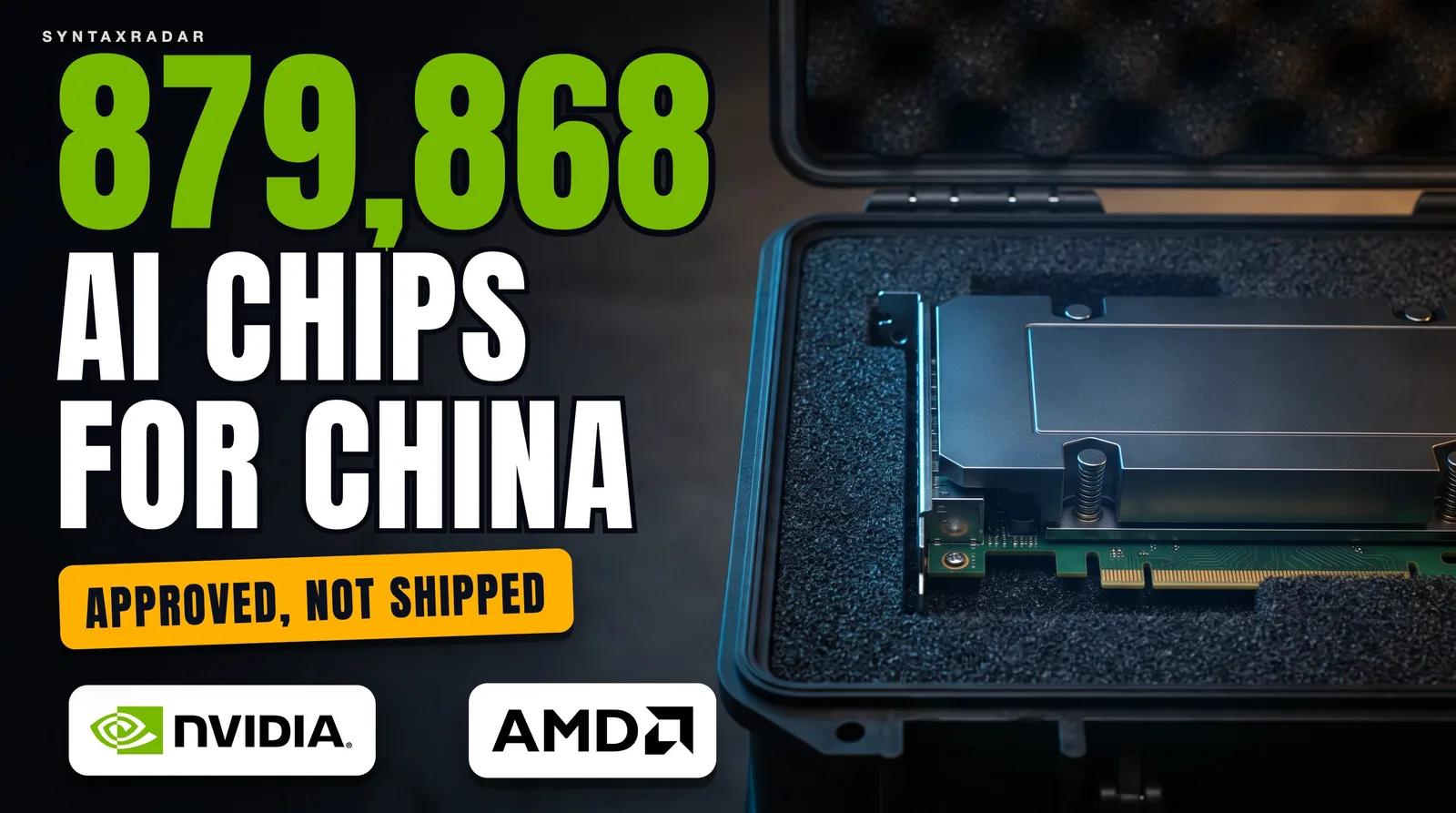
US Approves AI Chips to China: 879,868 H200 and MI325X Cleared
On November 19, 2026 the House Foreign Affairs Committee released BIS records: 879,868 Nvidia H200 and AMD MI325X chips approved for Chinese buyers as of May 11, 2026, out of…
Nov 22, 2026 · 6 min read
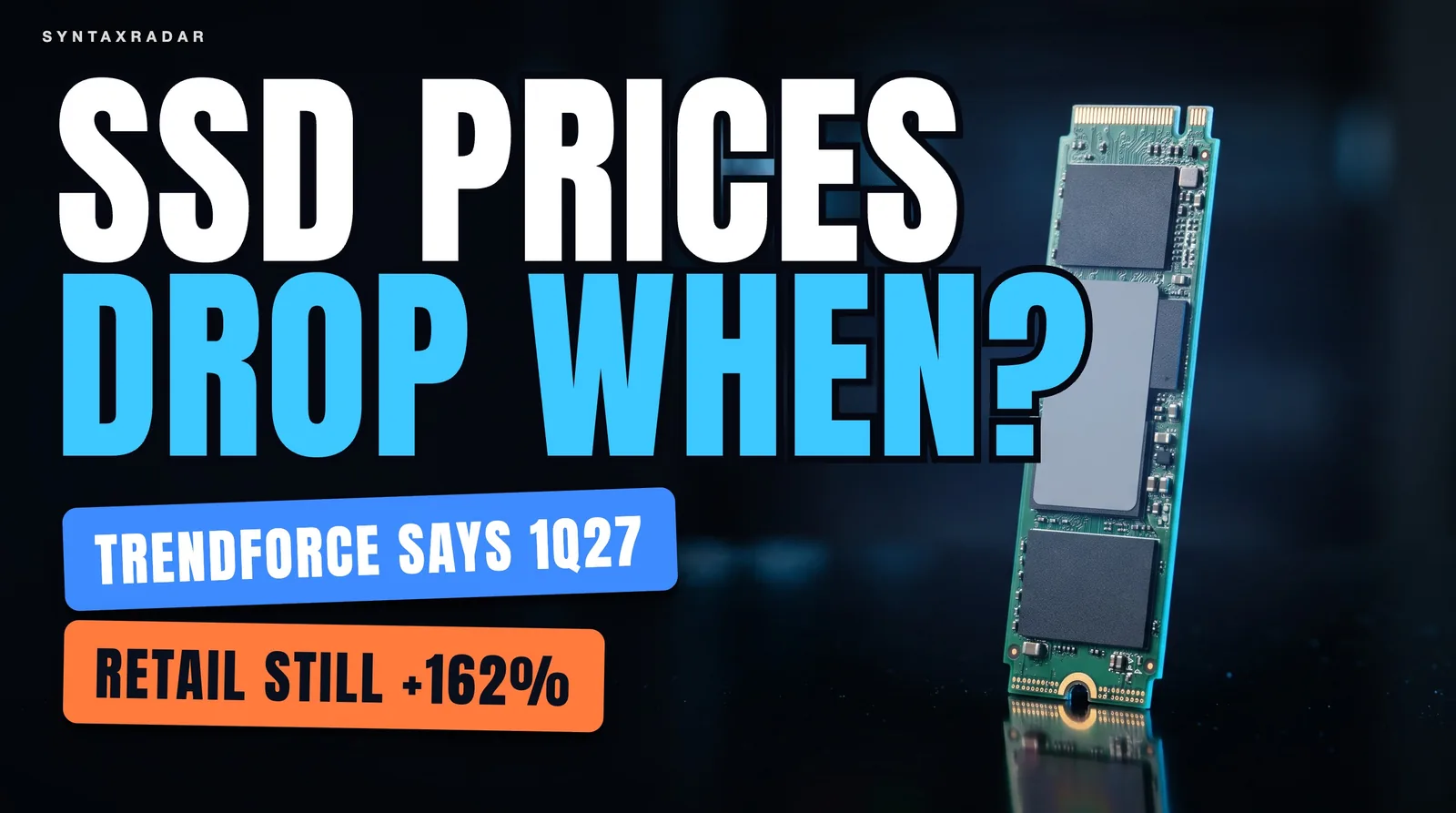
When Will SSD Prices Drop? TrendForce Says 2027, Retail Lags
On November 19, 2026 TrendForce forecast NAND contract prices falling 0% to 5% in 1Q27 and all categories declining from 2Q27, after cutting its 4Q26 rise to 8% to 13%. German…
Nov 21, 2026 · 8 min read

Colette Kress: Nvidia's Interim CEO, $115.8B Quarter, $130B Guide
On November 12, 2026 Nvidia named CFO Kress interim CEO after Jensen Huang resigned, giving no reason. On November 17 she reported $115.8B of revenue and guided Q4 to $130.0B,…
Nov 21, 2026 · 6 min read
Latest stories
Front page
NoisyTCP: The Linux Kernel TCP Flaw and Who Must Patch
Abdul Rehman · Nov 23, 2026 · 7 min read

Nothing AI Device: What Is Confirmed Before the Dec 8 Reveal
Abdul Rehman · Nov 22, 2026 · 7 min read
KB5132061: Windows 11 Install Errors Explained, and the Fix
Abdul Rehman · Nov 22, 2026 · 7 min read

OpenAI Usage Policies: Gateway Approval and Training Ban
Abdul Rehman · Nov 22, 2026 · 7 min read