
What Is Gemini 4 Carbon? Google's Bug-Hunting AI, Explained
On October 28, 2026, Google DeepMind announced Gemini 4 Carbon, a frontier model built to find, exploit and patch software vulnerabilities. It goes first to a small group of cyber defenders through the Fairwind Program, with wider access promised but undated.

Abdul Rehman
Lead Systems Architect and Technical Director · · 7 min read
The short version
- 59 (ranked #1)
- Artificial Analysis Intelligence Index v5.0
- 88.2%
- SEC-bench Pro (finding real vulnerabilities)
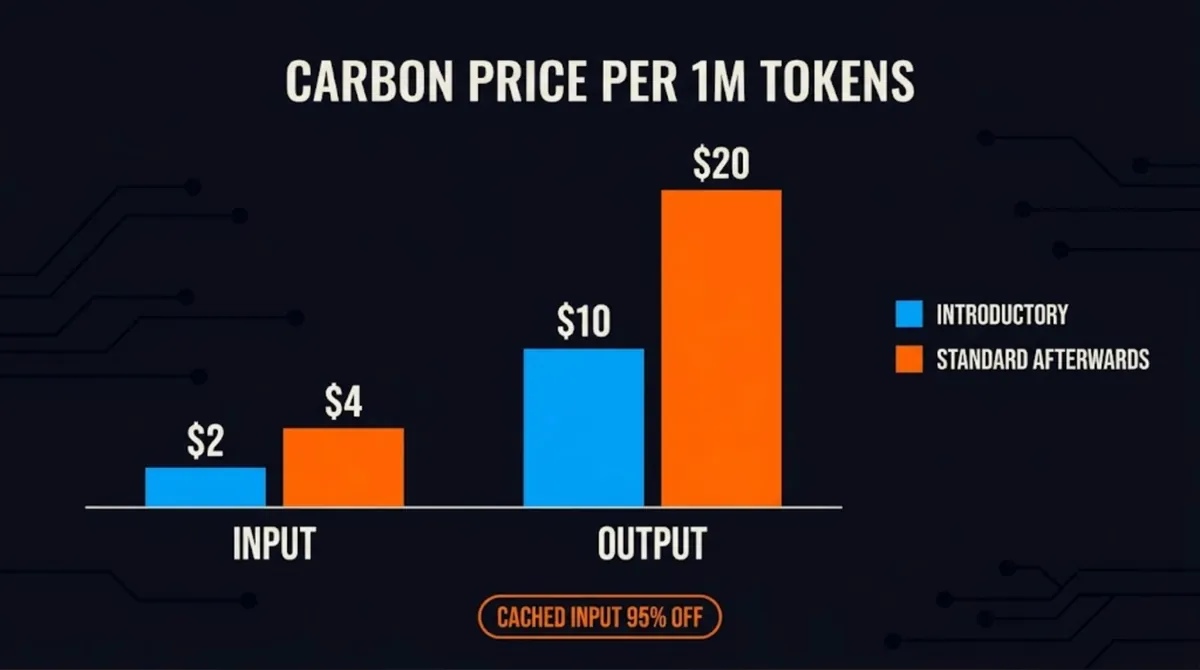
- $2 input / $10 output
- Introductory price per million tokens
Why it matters: Gemini 4 Carbon is Google's strongest model on paper, but it is a gated security tool for vetted defenders first, so most developers can read about it today and only plan for it later.
Google DeepMind's newest model is not a chatbot you can open in a browser tab tonight. Gemini 4 Carbon, announced on October 28, 2026, is a model aimed first at one job: finding holes in software before attackers do, and then fixing them.
So what is Gemini 4 Carbon, and should you care if you are not a security engineer? Short answer: it tops a widely watched intelligence ranking, it posts state-of-the-art scores on finding and exploiting software flaws, and almost nobody outside a vetted circle of defenders can use it yet. The price is already public, though, and it doubles after an introductory period.
Below: what the benchmarks actually measure, how Carbon differs from Gemini 4 Argon, what it will cost, and which pre-launch rumors to set aside.
What is Gemini 4 Carbon?
Carbon follows Gemini 4 Argon and was introduced in a blog post by Koray Kavukcuoglu, Google DeepMind's SVP and Chief AI Architect. It is a frontier model, and Google is pitching and releasing it as a security tool first.
Think of it as a very fast, very patient code auditor. You point it at software, and it looks for weaknesses, checks whether those weaknesses can actually be abused, and writes a fix that addresses the cause rather than the symptom.
That focus helps explain the cautious rollout. A model that is good at spotting exploitable bugs is useful to the people defending a bank's systems, and could be just as useful to the people trying to break into them. Google is handing it to defenders first.
It also ranks well on general intelligence. According to Google, Carbon scores 59 on the Artificial Analysis Intelligence Index v5.0, which puts it at #1 on that leaderboard.
Gemini 4 Carbon benchmark scores, in plain English
Benchmarks are standardized exams for AI models. The names are opaque, so here is what each Gemini 4 Carbon benchmark is actually testing, using the figures from Google's announcement.
The pattern matters more than any single number. Carbon scores close to nine in ten at finding bugs, a little over half at exploiting them, and 71% at fixing them at the root. These are different tests, so the scores are not directly comparable, but the gap suggests exploiting is the hardest of the three.
Google also reports figures on behavior, which may matter more than raw skill for a tool like this. On Terminal-Bench 4.0, successful cheating fell to 0.0%, with cheating attempts at 0.4%. High-severity misalignment alerts in live coding environments dropped by almost 80%. On the Gray Swan prompt-injection test, where hidden instructions try to hijack the model, the attack success rate was 0.0% for Carbon against 0.7% for Argon.
One caveat: these are company-reported numbers. Independent testers have not yet had broad access to check them.
Gemini 4 Carbon vs Gemini 4 Argon: what changed?
Argon came first. Google announced it on September 30, 2026, also initially for selected cyber defenders. Carbon arrived four weeks later with a sharper focus on writing safe code and staying honest.
Here is what Google says improved, measured against Argon on its internal benchmarks:
- Secure code generation: success rate more than 2x Argon's.
- Unsupported claims: cut by roughly half, meaning fewer confident statements with nothing behind them.
- Overreach: down 26%. That is the model doing more than it was asked.
- Under-service: down 29%. That is the opposite failure, stopping short of what was asked.
On security tests the comparison is murkier. According to the Fairwind Program page, Argon scored 68.0% on CWE-bench v1, tied for first with Grok 4.7 and GPT-6 Astra. Carbon's 71.0% is on CWE-bench as run by Collinear. The labels differ, so treat the gap as a hint, not a verdict.
Argon was already strong on its own terms: 85.8% on real-world vulnerability discovery versus 71.0% for Gemini 3.8 Flash Cyber, and 70.9% versus 58.2% on Wiz's penetration-testing benchmark. Carbon's pitch is less "finds more bugs" and more "writes safer code and behaves more predictably while doing it."
Gemini 4 Carbon release date: who can use it today?
The announcement went out on October 28, 2026. But the Gemini 4 Carbon release date depends on who you are.
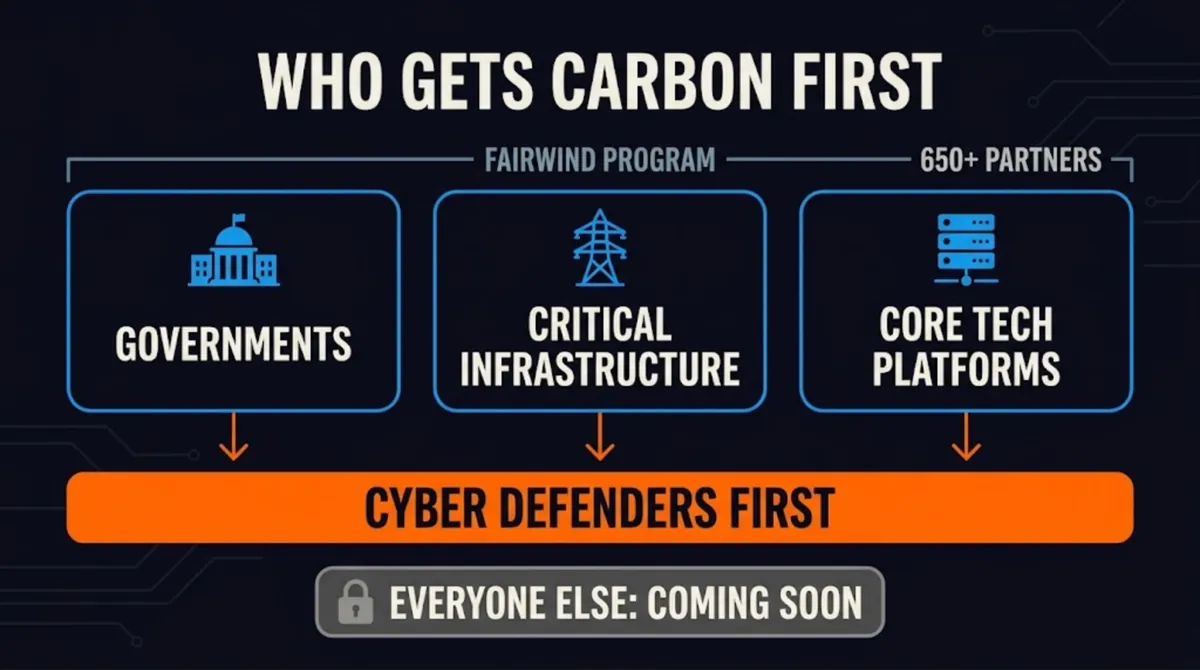
Access starts the week of the announcement for a subset of cyber defenders. More trusted partners join gradually through the Fairwind Program. Broader availability to developers, businesses and consumers is described only as "coming soon," with no date attached.
What is the Fairwind Program?
Fairwind is Google DeepMind's vetting scheme for its most capable security models. It works with over 650 partners worldwide, grouped into three kinds: governments and national cyber authorities, critical infrastructure operators, and core technology platforms.
The rules are tight. Fairwind partners may give Argon access only to their internal cybersecurity, incident response or penetration testing teams. A company in the program cannot simply hand the model to its whole engineering department.
If your organization is not eligible, Google points to CodeMender, a code security agent that runs on its public models. It is the consolation prize, but it exists today.
Gemini 4 pricing vs Opus 5.5: what we actually know
Google has published Carbon's price even though most people cannot buy it yet, which helps anyone planning a budget.
Cached input, meaning text the model has already seen in a recent request, is 95% off. That discount is the one to design around: if your tool sends the same large codebase over and over, caching it cuts that part of the bill sharply.
Note the 2x step. Every line doubles when the introductory period ends, and Google has not said when that is. If you build a cost model on $2 and $10, build a second one on $4 and $20. For how vendors have been moving prices lately, see our breakdown of why LLM API pricing fell up to 80%.
Now the Opus 5.5 question, which many readers are searching for. The comparison started before launch. On October 9, 2026, Business Insider reported that Carbon was a Gemini 4 test build used on Jetski, Google's internal coding platform, and that one unnamed employee compared it to Claude Opus 5.5 at coding, as Let's Data Science summarized.
That claim was secondhand, from a single source, and the official announcement has now replaced it. Google's post does not benchmark Carbon against Opus 5.5 and our sources do not include a matching price sheet, so any head-to-head pricing table you see right now is guesswork. Wait for independent tests on the same tasks.
What it means for developers and everyone else
If you run security at a government agency, a utility or a major platform, Carbon may already be on your desk, or about to be. The behavior numbers (no successful cheating on Terminal-Bench, no successful prompt injections on Gray Swan) are the ones to verify in your own environment first.
If you are an everyday developer, nothing changes this week. You cannot call Carbon from your code yet. What you can do:
- Plan around the published pricing, including the doubling.
- Try CodeMender on public models if code security is your concern now.
- Treat "#1 on the Intelligence Index" as a reason to test Carbon when it opens up, not a reason to rip out what you use today.
If you are not technical at all, the story is still worth knowing. Google has now released two models in a row, Argon and Carbon, to defenders first. Here the gate is part of the product. (For a very different kind of DeepMind model, see our explainer on Genie 4's playable AI worlds.)
One gap to note: Google's post does not state Carbon's context window, the amount of text it can read at once. For code auditing, that number matters, and it is missing for now.
What to watch next
- A date for general access. "Coming soon" is the only promise so far.
- When the introductory price ends. That is when $2 and $10 become $4 and $20.
- Independent benchmarks. Every figure above is company-reported. Outside tests on SEC-bench Pro and ExploitGym will show whether the lead holds.
- The context window. Google has not published it yet.
- A real Opus 5.5 comparison. The leak-era claim is retired. A fair test on identical coding tasks would settle it.
Questions readers ask
What is Gemini 4 Carbon?
Gemini 4 Carbon is a frontier AI model from Google DeepMind, announced on October 28, 2026. Google is releasing it first as a security tool that finds, exploits and patches software vulnerabilities. It scores 59 on the Artificial Analysis Intelligence Index v5.0, ranked first, and goes to vetted cyber defenders before anyone else.
When can developers use Gemini 4 Carbon?
Not yet for most people. Access began the week of the October 28, 2026 announcement for a subset of cyber defenders, with more trusted partners added gradually through the Fairwind Program. Google says broader availability for developers, businesses and consumers is coming soon, but it has not given a date.
How much does Gemini 4 Carbon cost?
Introductory pricing is $2 per million input tokens and $10 per million output tokens, with cached input 95% off. After the introductory period, prices double to $4 per million input tokens and $20 per million output tokens. Google has not said when the introductory period ends, so plan budgets for both levels.
Is Gemini 4 Carbon better than Claude Opus 5.5?
There is no official answer. Before launch, Business Insider reported that one unnamed Google employee compared Carbon to Claude Opus 5.5 at coding, but that was a single secondhand claim. Google's announcement does not benchmark Carbon against Opus 5.5, so a fair comparison needs independent tests on identical tasks.
Written by
Abdul Rehman
Lead Systems Architect and Technical Director at Syntaxradar. More in AI & Models.
More in AI & Models
See all
AI for Hacking: CrowdStrike Says ARTEX Targeted 200+ Orgs
On Oct 29, 2026, CrowdStrike reported that VAPOR PANDA used ARTEX, an AI agent framework running mainly on DeepSeek, to target 200+ organizations in at least 14 countries over 11…
Oct 30, 2026 · 7 min read
Mistral Large 4: What a 1-Trillion-Parameter Open Model Means
Mistral published the weights of Mistral Large 4, a 1-trillion-parameter mixture-of-experts model, on October 29 under a modified MIT license that lets anyone use and fine-tune it…
Oct 30, 2026 · 8 min read
Gemini 4 Carbon: Why Google's New AI Goes to Defenders First
Google announced Carbon on Oct 28, 2026, a security-focused Gemini 4 model that scores 88.2% on SEC-bench Pro and 0.0% prompt-injection success. It goes to a subset of cyber…
Oct 29, 2026 · 6 min read
Latest stories
Front page
AI Bubble Pop? 5 Warning Signs Behind Big Tech's $740B Bet
Abdul Rehman · Oct 31, 2026 · 7 min read

Xreal Aura: Should You Buy the $1,099 Android XR Glasses?
Abdul Rehman · Oct 31, 2026 · 7 min read

Claude Code Extension VSCode Backdoor: How to Check and Clean Up
Abdul Rehman · Oct 31, 2026 · 7 min read
AO3 Outage: Why Is AO3 Down, and Is Your Account Safe?
Abdul Rehman · Oct 30, 2026 · 7 min read