


Solid State Battery: Where the Technology Really Stands in 2026
No automaker has shipped a fully solid-state battery in a customer car yet. Toyota, Samsung SDI and QuantumScape target 2027 to 2028, while CATL's sodium-ion pack heads into a mass-market car in China.

Abdul Rehman
Lead Systems Architect and Technical Director · · 5 min read
The short version
- 12.2 minutes
- QuantumScape B-sample charge, 10 to 80%
- 900 Wh/L, about 40% higher
- Samsung SDI claimed density vs its P5 cell
- 175 Wh/kg
- CATL Naxtra sodium-ion density
Why it matters: Solid state batteries have promising lab numbers but no customer cars yet, so judge them by 2027 production results.
A solid state battery swaps the liquid inside a lithium-ion cell for a solid material, and as of late October 2026 no automaker has put one in a customer's car. Toyota, Samsung SDI and QuantumScape all point to 2027 or 2028 for first production, according to a 2026 industry scorecard. Meanwhile a different chemistry, sodium-ion, is already heading into a mass-market car.
What is a solid state battery?
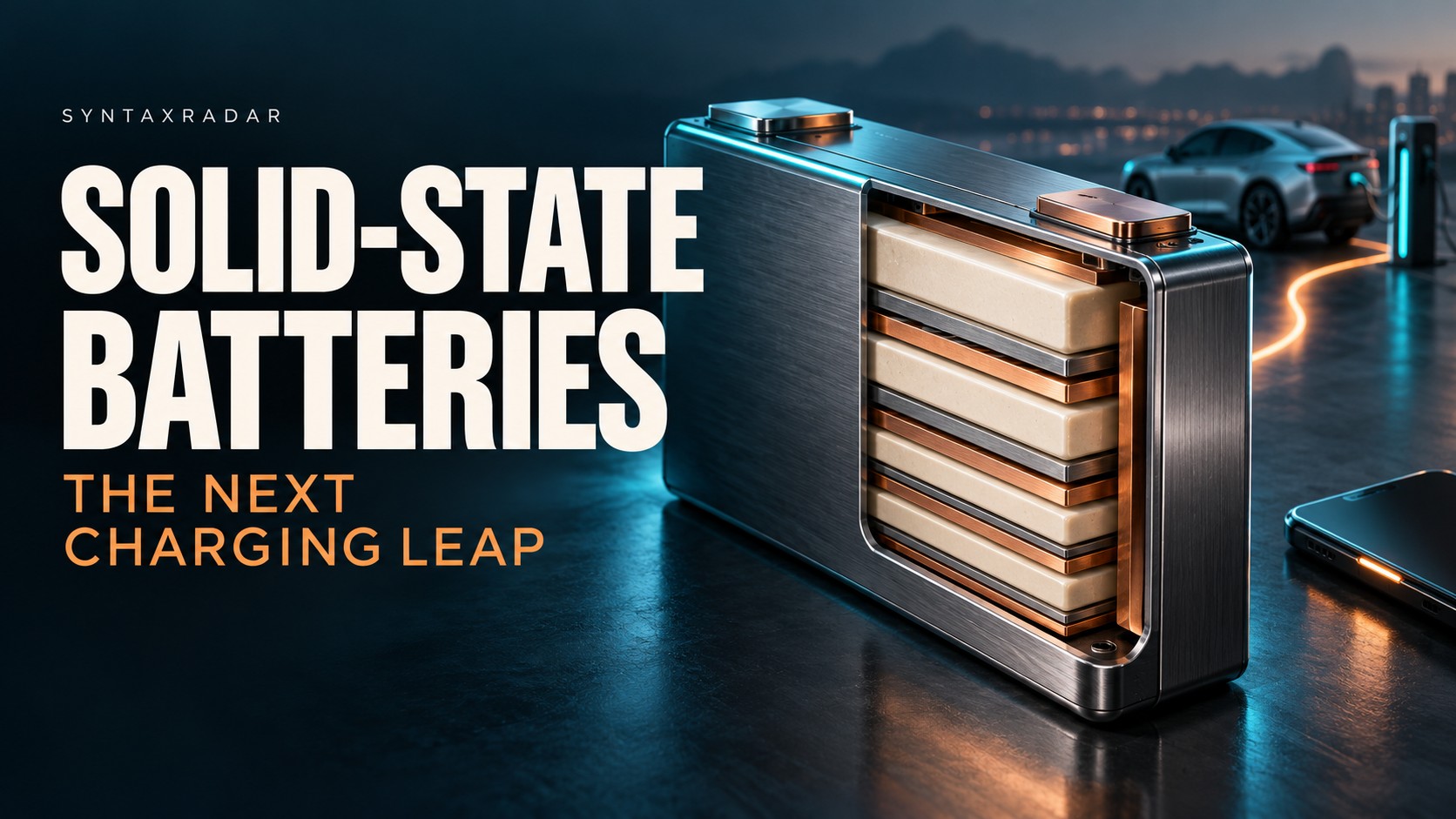
Every battery has two electrodes and a material between them that lets charged atoms (ions) travel back and forth. That material is the electrolyte. In today's lithium-ion cells it is a flammable liquid. In a solid state battery it is a solid, such as a ceramic, a glass-like material or a sulfide compound.
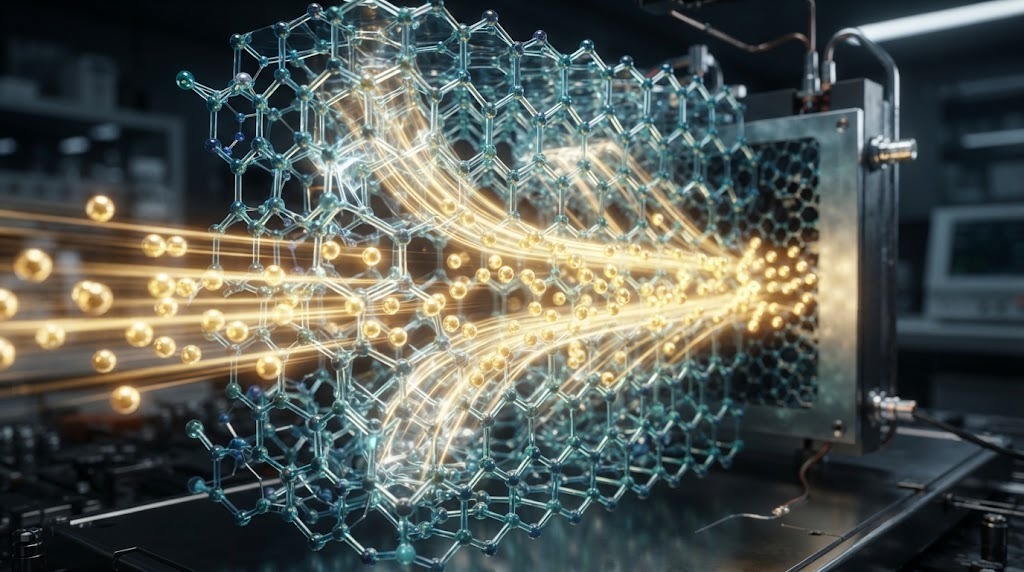
The solid layer is meant to do two jobs. It can allow a lithium metal electrode, which stores more energy than the graphite used today, and it can resist the thin metal spikes called dendrites that grow during charging and can short-circuit a cell.
Researchers still disagree about how well solid electrolytes block dendrites. A University of Maryland team reported that two leading solid electrolyte materials, known as LLZO and LPS, can facilitate dendrite growth rather than stop it, according to a DOE-funded project announcement.
The appeal is energy density, meaning how much energy fits in a given volume or weight. Samsung SDI, for example, claims 900 watt-hours per litre for its oxide-based cells, about 40% above its own current P5 lithium-ion cell, according to the scorecard. That is a company claim for prototype cells.
QuantumScape's B-sample cells reach 844 watt-hours per litre in the same scorecard. Both numbers describe cells shipped to partners for testing. A finished battery pack adds casing, cooling and wiring, so pack-level figures come out lower than cell-level ones.
How fast can a solid state battery charge?
The headline numbers come from two sources. QuantumScape reports its B-sample cells charge from 10% to 80% in 12.2 minutes, and Toyota claims 10% to 80% in 10 minutes, per the same scorecard. Toyota's figure is a projection, since the cells are not in customer cars.
Fast charging is hard on any battery because high current pushes lithium ions hard against the electrode. That is where dendrites tend to form. A solid layer that stays stable under high current would allow quicker charging, which is why the claims cluster around the ten-minute mark.
A ten-minute charge in a test cell says little about years of daily charging in a real car, and that kind of track record does not exist yet.
Is a solid state battery safer than lithium-ion?
Often yes, with an important exception. Sandia National Laboratories researchers published a study in Joule in March 2022 comparing the heat released by lithium-ion cells and two solid state designs. The design containing a little liquid electrolyte released about one-fifth the heat of a comparable lithium-ion battery in fire exposure, and the fully solid version produced no heat in that test.
The same study found that dendrite short circuits released similar heat in all three types, depending on how much lithium metal was present. It also reported that a short circuit in the all-solid cell could release a dangerous amount of heat.
So the idea that solid-state cells carry no fire risk overstates the evidence. A solid electrolyte removes one fuel source, the flammable liquid, while leaving other failure routes in place.
When will a solid state battery reach cars?
Company targets point to 2027 and 2028, and the track record of those targets is poor. The scorecard lists Toyota as targeting mass production in 2027 with first cars in 2027 to 2028, after earlier promises of 2020 and then 2025. It adds that Toyota received production approval in Japan in October 2025.
Samsung SDI also targets 2027, from a roadmap that once showed prototypes in 2025. QuantumScape targets field tests in Volkswagen vehicles in 2026 and mass production in 2027 to 2028, versus a 2024 projection in a 2020 investor presentation. QuantumScape's PowerCo license covers up to 40 gigawatt-hours a year, the scorecard says.
The scorecard counts zero all-solid-state cells in customer cars so far and says the step from lab to factory has added two to four years each time. Its listed hurdles include resistance where the electrolyte meets the electrodes, dendrites under high current and factory conditions with moisture below one part per million.
Why is it so expensive?
The scorecard cites analyst estimates (BloombergNEF and IDTechEx) of $400 to $600 per kilowatt-hour for solid state cells, against roughly $80 to $100 for lithium-ion. It reports no expected price parity before 2032 to 2035.
The same piece says Toyota plans its first cars for Lexus flagships, at an estimated 800,000 to 1,000,000 yuan (about $110,000 to $137,000).
Lithium-ion got cheap by being made in huge quantities, and solid state has not yet had that chance.
Solid state battery vs sodium ion battery: which is closer?
Sodium-ion is closer to the road. CATL and Changan announced the Changan Nevo A06 with CATL's Naxtra sodium-ion pack, described by New Atlas as the first mass-production EV using sodium-ion batteries. It is due in mid-2026, initially in China.
Sodium is a cheaper, more abundant material than lithium. According to the report, the chemistry avoids cobalt and nickel and uses aluminum foil instead of copper. The trade-off is energy density: Naxtra is reported at 175 Wh/kg, which CATL says is the highest in mass production for sodium, and which still trails lithium iron phosphate (LFP), a common lower-cost lithium chemistry.
CATL also reports that the pack keeps over 90% of its capacity at -40 °C and that crush, puncture and saw tests produced no smoke or flames. The A06 is reported at over 400 km of range. These are CATL's claims and have not been independently verified.
Sodium-ion targets cheaper, cold-tolerant packs, while solid state targets longer range and faster charging at higher cost. CATL's sodium grid-storage unit is rated at about 160 Wh/kg and over 15,000 cycles to 80% capacity, with deployment planned before the end of 2026.
What about semi-solid batteries?
Semi-solid cells, which use a gel or reduced-liquid electrolyte, are the part of this story already on roads. NIO has shipped a 150 kWh semi-solid pack since 2024, with about 360 Wh/kg reported, and an ET7 drove 1,070 km on one in April 2024, according to the scorecard. It says "thousands" are in use, available through swap stations in China and select European markets.
CATL targets semi-solid mass production for late 2026 and claims 500 Wh/kg for those cells. The scorecard lists no customer cars with that cell yet.
Semi-solid is the likelier first taste of the technology for most drivers. It also muddies the labels, because marketing may call a gel cell "solid state" when the cell still contains liquid components.
What to watch next
Samsung SDI's mass production start in 2027 is the first marker. Toyota putting an all-solid-state car in customer hands, and at what price, is the second. QuantumScape's Volkswagen field tests will show how the cells behave over repeated charging. The Changan Nevo A06 will show whether the range and cold-weather behavior CATL claims hold up on the road.
For readers shopping for a car now, the practical advice is to buy on today's lithium-ion or LFP specifications, because nothing sold today depends on solid state arriving.
Questions readers ask
What is a solid state battery?
A solid state battery is a rechargeable battery that uses a solid electrolyte, the material that carries ions between the electrodes, instead of the flammable liquid in today's lithium-ion cells. Makers hope this allows more stored energy, faster charging and better safety, but the technology is still at pilot stage and no customer car uses a fully solid cell yet.
When will solid state batteries be in cars?
Toyota, Samsung SDI and QuantumScape each target mass production in 2027, with first cars in 2027 to 2028, according to a 2026 industry scorecard. Earlier targets slipped repeatedly, and the scorecard counts no all-solid-state cells in customer cars so far. Treat 2027 as a company goal.
Are solid state batteries safer than lithium-ion?
Often, but not always. A 2022 Sandia National Laboratories study in Joule found a solid state design with a little liquid released about one-fifth the heat of a comparable lithium-ion battery in fire exposure. The same study found short circuits from lithium dendrites released similar heat in all types, and a fully solid cell could still release dangerous heat.
Is a sodium-ion battery the same as a solid state battery?
No. Sodium-ion batteries replace lithium with sodium, while solid state batteries replace the liquid electrolyte with a solid. CATL's Naxtra sodium-ion cell is reported at 175 Wh/kg and is headed into the Changan Nevo A06 in China, according to New Atlas. It targets low cost and cold weather.
Written by
Abdul Rehman
Lead Systems Architect and Technical Director at Syntaxradar. More in Chips & Hardware.
More in Chips & Hardware
See all
Xreal Aura: Should You Buy the $1,099 Android XR Glasses?
Xreal launched the Aura, the first glasses built on Google's Android XR, on October 28, 2026. It costs $1,099 (regular $1,279) through December and ships mid-November to the US,…
Oct 31, 2026 · 7 min read

SSD Prices: Why AI Datacenters Are Making Storage Cost More
The contract price of a 256GB TLC SSD hit about $134.20 in Q3 2026, up 303% from $33.30 a year earlier, as AI cloud buildouts absorb NAND flash. TrendForce expects NAND contract…
Oct 29, 2026 · 7 min read

MacBook Touch Screen: Which New MacBook Pro Finally Has One
On October 28, 2026, Apple announced the MacBook Pro with PROLED XDR Display, 14- and 16-inch models with M5 Pro or M5 Max and the first touch screen on a MacBook Pro. It ships…
Oct 29, 2026 · 8 min read
Latest stories
Front page
AI Bubble Pop? 5 Warning Signs Behind Big Tech's $740B Bet
Abdul Rehman · Oct 31, 2026 · 7 min read

Claude Code Extension VSCode Backdoor: How to Check and Clean Up
Abdul Rehman · Oct 31, 2026 · 7 min read
AO3 Outage: Why Is AO3 Down, and Is Your Account Safe?
Abdul Rehman · Oct 30, 2026 · 7 min read

AI for Hacking: CrowdStrike Says ARTEX Targeted 200+ Orgs
Abdul Rehman · Oct 30, 2026 · 7 min read