


xAI Colossus: What the Memphis Supercomputer Really Is
xAI built Colossus in Memphis with 100,000 Nvidia Hopper GPUs in about 122 days to train Grok. It has since drawn permit disputes over its gas turbines, and reports say Anthropic now uses all of Colossus 1.

Abdul Rehman
Lead Systems Architect and Technical Director · · 5 min read

The short version
- 100,000 Nvidia Hopper GPUs
- GPUs at launch
- About 122 days
- Build time
- 95% with Spectrum-X
- Network throughput (NVIDIA claim)
Why it matters: Colossus is a real, fast-built training cluster, but the real-time Grok answers come from search tools, and most performance claims still come from the companies selling the hardware.
xAI Colossus is the AI training supercomputer that xAI built in a former factory in Memphis, Tennessee, to train its Grok chatbots. NVIDIA's announcement from October 2024 put the first version at 100,000 Nvidia Hopper GPUs (graphics processing units, the chips that do most of the math in AI training) and said it went up in about 122 days.
Since then the story has grown past Grok. xAI merged into SpaceX, Colossus 1 has reportedly been rented out to Anthropic, and the site has drawn a long fight over the gas turbines that power it.
What is xAI Colossus, and what does it do?
Colossus is a data center, a building full of servers, built for one job: training large language models, the software behind chatbots like Grok. Training means running a model over enormous amounts of text again and again until it gets good at predicting the next word. That takes thousands of chips working on the same problem at once, wired together into a cluster, a group of computers that work as one machine.
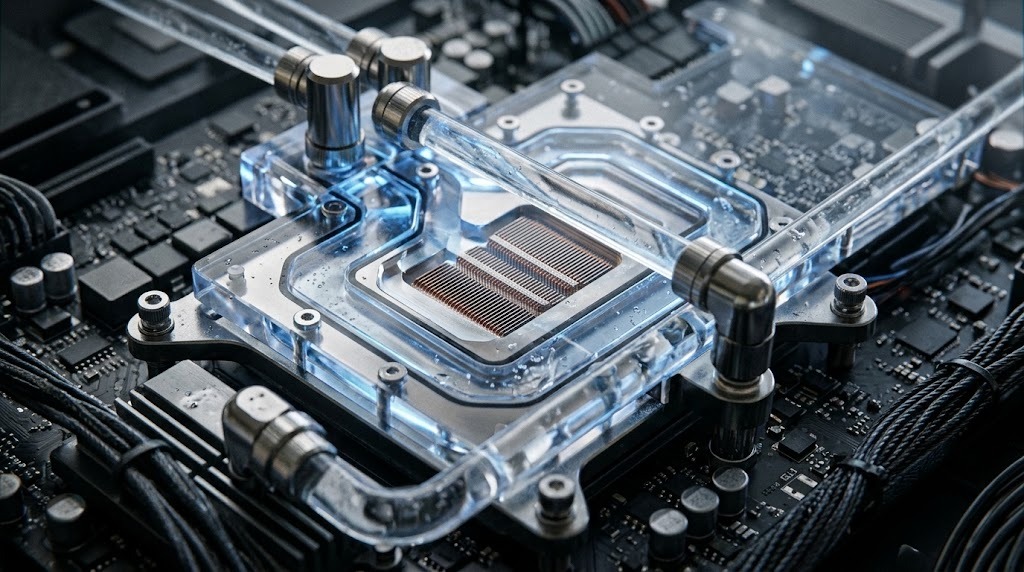
According to NVIDIA, Colossus was built to train xAI's Grok models, which are offered to X Premium subscribers. Supermicro, which supplied the servers, describes it as the largest liquid-cooled AI cluster in the world and says it uses 100,000 NVIDIA Hopper GPUs with direct-to-chip liquid cooling. Liquid cooling pipes coolant right to the chips, which is how servers this dense stay at a safe temperature.
Colossus is where the model is made. NVIDIA's release describes it as a training system, and the chatbot you talk to is the finished product of that training.
How was xAI Colossus built in 122 days?
NVIDIA's release says the build took about 122 days from start to finish and that training began 19 days after the first server rack arrived. The building was an old Electrolux factory in South Memphis, so xAI did not have to pour a new shell.
The companies have not published how xAI managed that pace or a construction timeline beyond the 122-day and 19-day figures. The documented result is a cluster of 100,000 Hopper GPUs, liquid-cooled and linked by one Ethernet network, running training within weeks of the first rack arriving.
The 122-day figure is the number NVIDIA and xAI gave for the first 100,000 GPUs; larger and later expansions took different amounts of time.
NVIDIA also said xAI planned to double the cluster to 200,000 Hopper GPUs. An Inside Deep Tech guide that cites xAI's own page says that doubling took 92 days.
How does the network keep 100,000 GPUs working together?
The chips also have to swap data constantly, and if the network is slow, expensive GPUs sit idle waiting for each other.
Colossus uses NVIDIA's Spectrum-X Ethernet, built on Spectrum SN5600 switches and BlueField-3 SuperNICs (network cards that offload traffic handling from the main processor). NVIDIA says the system saw no application latency degradation or packet loss from flow collisions, which happen when many data streams crowd the same network path.
NVIDIA also reports 95% data throughput with its congestion control, compared with about 60% for standard Ethernet at this scale. That is a vendor claim from the company selling the network. The network is what lets 100,000 chips work together as one training system.
For readers who want more on the physics of moving data between chips, the co-packaged optics explainer covers why networking has become the bottleneck for clusters like this.
Does Grok really get real-time data from X?
Partly. The training run in Memphis produces a fixed model with a knowledge cutoff, like every other chatbot. Fresh information comes from search tools that Grok calls when it answers.
xAI's developer documentation describes an X Search tool that lets Grok run keyword search, semantic search, user search and thread fetch on X, then cite the posts it found. The docs list a price of $5 per 1,000 posts fetched, on top of normal token costs, and say developers switch it on by adding it to a request. Search at answer time is a separate step from training, so the quality of a live answer depends on what the search finds as well as on the model built in Memphis.
So "Grok knows what happened thirty seconds ago" is only true when that search runs and returns something useful.
Why is Colossus controversial in Memphis?
An Inside Deep Tech guide citing Memphis Light, Gas and Water says the utility was supplying 150 megawatts to the site in May 2025, with another 150 requested. xAI also brought in on-site gas turbines, which residents and regulators have argued about.
Inside Climate News reported in July 2025 that residents and activists said Colossus ran turbines without the right permits. According to reporting summarized by Global Energy Monitor, the Shelby County Health Department then issued a permit for up to 15 turbines producing about 247.2 megawatts. Aerial imagery from April 2025 reportedly showed about 35 turbines on site, more than the permit covered at the time. A permit sets a legal ceiling on output, which is why the gap between the permitted 15 turbines and the roughly 35 seen in imagery drew attention.
The Southern Environmental Law Center and the NAACP pushed back, and residents of nearby neighborhoods raised health concerns. xAI has described the turbines as backup power. Critics dispute that and have called for stricter permitting. Exact turbine counts and legal outcomes have kept changing, so check current local reporting before quoting any figure.
What is Colossus 2, and who uses Colossus 1 now?
Colossus 2 is the next-generation site, spread across the Tennessee and Mississippi border near Memphis and built around newer Nvidia GB200 and GB300 chips. Epoch AI, an independent research group, estimates it at about 1.11 million H100-equivalents on 946 megawatts of IT power. An H100-equivalent expresses newer chips in units of one Nvidia H100 so that different clusters can be compared.
Colossus 1 has a new tenant. News coverage from CNBC, Axios and Data Center Dynamics reported on May 6, 2026 that Anthropic agreed to use all of Colossus 1's capacity, described as more than 300 megawatts and over 220,000 Nvidia GPUs. Anthropic said the capacity would help its paid Claude Pro and Max subscribers. One outlet reported a price of $1.25 billion per month, but that comes from a single source and is unconfirmed.
What to watch next
Whether Colossus 2 delivers a better Grok is the main question. Bigger clusters do not guarantee better models, and xAI has to show results. The Anthropic deal also raises the question of how much capacity xAI wants to keep for itself.
The power fight continues. The same problem shows up across the industry, and the Anthropic IPO numbers piece shows how much money now rides on getting compute online. Court rulings and permit decisions in Tennessee and Mississippi could change how fast sites like this get built.
Independent measurements would help. Almost every performance claim about Colossus comes from the companies that sell or run it. Third-party figures from groups like Epoch AI are worth more.
Grok's search tools are also worth following. If real-time answers are what set Grok apart from rivals, the X Search tool and its pricing will matter more than the chip count.
Questions readers ask
What is xAI Colossus?
It is an AI training data center in Memphis, Tennessee, built in a former factory to train the Grok language models. NVIDIA's October 2024 announcement described the first version as 100,000 Hopper GPUs linked by Spectrum-X Ethernet, built in about 122 days. Supermicro supplied the liquid-cooled servers.
Where is xAI Colossus located?
The original site is in South Memphis, Tennessee, in a former Electrolux factory. Reporting places the second site, Colossus 2, across the Tennessee and Mississippi border near Memphis. The power setup at these sites, especially the on-site gas turbines, has been disputed by local residents and environmental groups.
How many GPUs does xAI Colossus have?
NVIDIA said the first cluster used 100,000 Hopper GPUs and that xAI planned to double it to 200,000. News coverage in May 2026 describes Colossus 1 as holding over 220,000 Nvidia GPUs. Epoch AI, a third-party group, estimates Colossus 2 at about 1.11 million H100-equivalents.
Does Grok use real-time data from X?
Grok can search X when a search tool is enabled. xAI's documentation describes an X Search tool that runs keyword search, semantic search, user search and thread fetch, and cites the posts it finds. The Colossus training run itself produces a fixed model, so live information comes from search at answer time.
Written by
Abdul Rehman
Lead Systems Architect and Technical Director at Syntaxradar. More in AI & Models.
More in AI & Models
See all
AI for Hacking: CrowdStrike Says ARTEX Targeted 200+ Orgs
On Oct 29, 2026, CrowdStrike reported that VAPOR PANDA used ARTEX, an AI agent framework running mainly on DeepSeek, to target 200+ organizations in at least 14 countries over 11…
Oct 30, 2026 · 7 min read
Mistral Large 4: What a 1-Trillion-Parameter Open Model Means
Mistral published the weights of Mistral Large 4, a 1-trillion-parameter mixture-of-experts model, on October 29 under a modified MIT license that lets anyone use and fine-tune it…
Oct 30, 2026 · 8 min read
What Is Gemini 4 Carbon? Google's Bug-Hunting AI, Explained
On October 28, 2026, Google DeepMind announced Gemini 4 Carbon, a frontier model built to find, exploit and patch software vulnerabilities. It goes first to a small group of cyber…
Oct 29, 2026 · 7 min read
Latest stories
Front page
AI Bubble Pop? 5 Warning Signs Behind Big Tech's $740B Bet
Abdul Rehman · Oct 31, 2026 · 7 min read

Xreal Aura: Should You Buy the $1,099 Android XR Glasses?
Abdul Rehman · Oct 31, 2026 · 7 min read
Claude Code Extension VSCode Backdoor: How to Check and Clean Up
Abdul Rehman · Oct 31, 2026 · 7 min read

AO3 Outage: Why Is AO3 Down, and Is Your Account Safe?
Abdul Rehman · Oct 30, 2026 · 7 min read